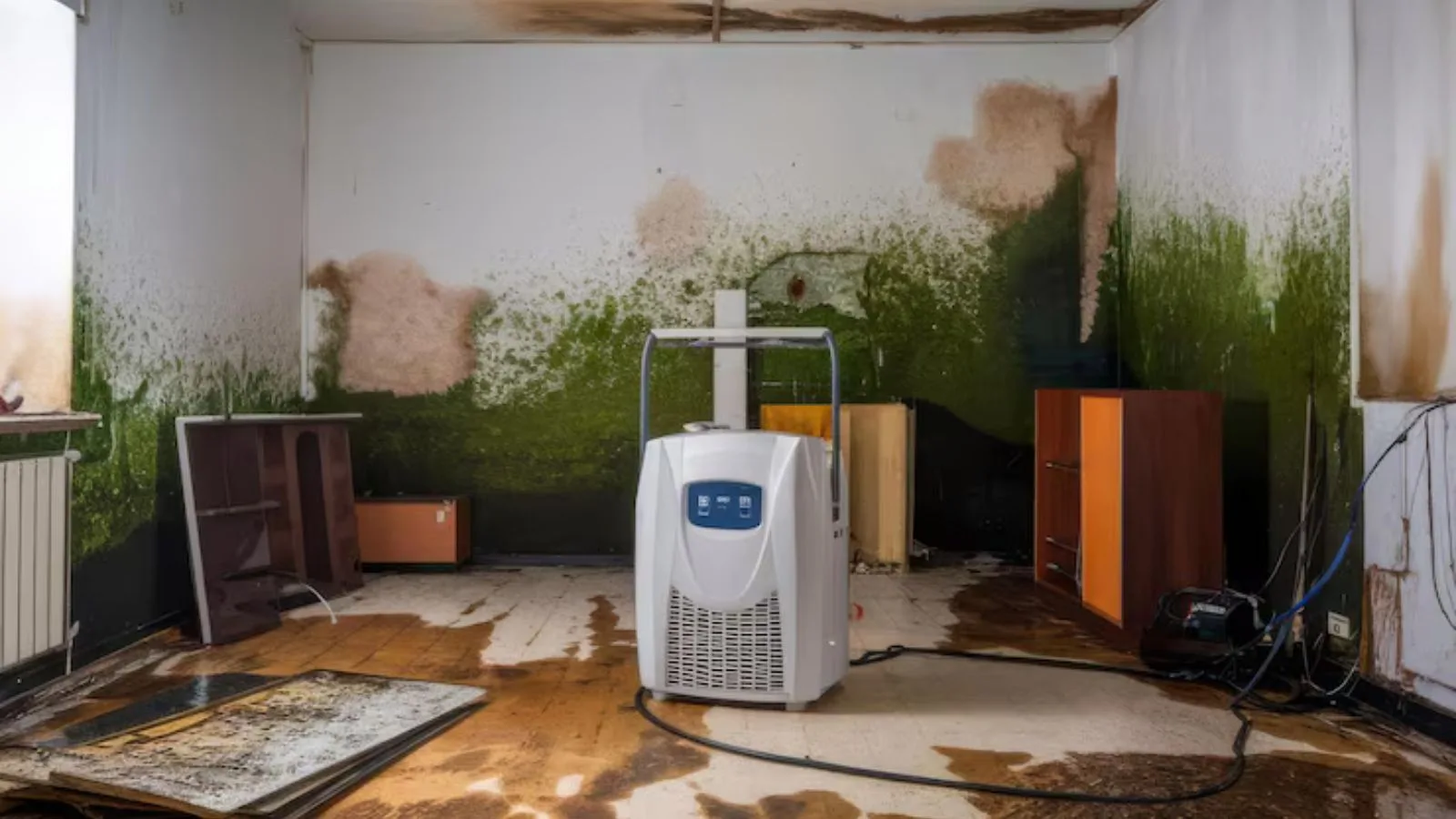
Water damage restoration is a distinct service from plumbing repair: it's about cleaning up, drying out, and restoring a space after water has already caused damage, whether from a burst pipe, an appliance failure, or storm-driven flooding. If a pipe is still actively leaking, that's a plumbing repair call first; this service covers the aftermath and structural cleanup.
Why Fast Response Matters
Mold growth can begin within 24 to 48 hours in a wet, warm environment, which is why the response window for water damage restoration is measured in hours, not days. Industrial dehumidifiers and air movers pull moisture out of flooring, drywall, and framing before it has a chance to become a bigger structural or air quality problem.
What The Process Involves
The first step is extracting any standing water, followed by moisture mapping to identify exactly which materials have absorbed water and how deep it goes. Drying equipment is then set up and monitored over several days until moisture readings in the affected materials return to normal, at which point repairs or reconstruction can safely begin.
Water Categories: Why The Source Matters
The restoration industry's IICRC S500 standard classifies water damage into three categories: Category 1 is clean water from a supply line, Category 2 is water that's picked up some contamination, like from a washing machine overflow, and Category 3 is grossly contaminated water, such as sewage backup. The category determines what can be dried and saved versus what needs to be removed and replaced.
A burst supply line handled quickly is usually Category 1 and often allows drywall and flooring to be dried in place. Sewage backup is always Category 3 and requires removal of affected porous materials rather than drying them, regardless of how the space looks on the surface.
Kennesaw's Storm And Slab-Leak Water Damage Sources
Slab leaks left unaddressed long enough, and storm-driven water intrusion during heavy rain, are two of the more common water damage triggers seen across Kennesaw specifically, given the area's red clay soil and mix of older and newer construction. Either source usually starts as Category 1 clean water, but the classification can shift to Category 2 the longer it sits and picks up contaminants from flooring or wall materials.
Response begins with extraction and moisture mapping on the same visit the call comes in, since the first 24 to 48 hours matter most for limiting how much material ends up needing replacement rather than just drying.
What Water Damage Restoration Costs
Real cost depends on how much water was involved, how long it sat before response began, which materials absorbed water, and whether the source was clean, gray, or contaminated water per the IICRC S500 classification. Most homeowners policies cover sudden, accidental water damage, though coverage details and deductibles vary by policy. Want your real number? Call (833) 521-1033.
Standing water or storm flooding right now?
☎ (833) 521-1033What To Document For Insurance
- Photograph the damage before any cleanup begins, from multiple angles.
- Note the time the water damage started, if known.
- Keep receipts for any emergency mitigation steps you take yourself.
- Avoid throwing away damaged items until the adjuster has reviewed them, if possible.
If the cause is still an active leak rather than aftermath cleanup, the underlying plumbing problem needs to be fixed first: see general plumbing repair for a burst pipe or fitting failure, or sump pump installation and repair if a failed pump let water rise. For ongoing prevention against basement flooding specifically, see basement waterproofing.