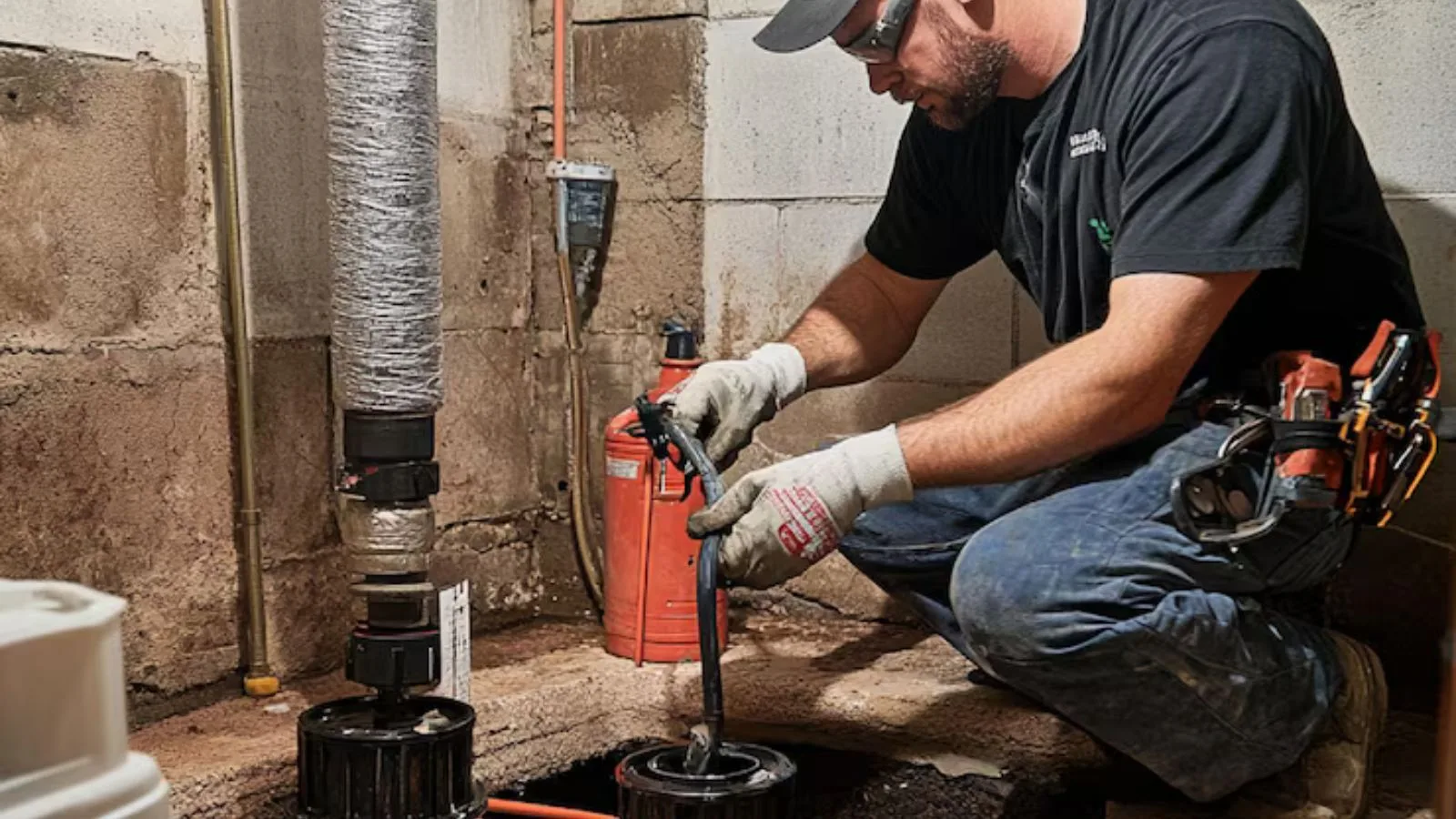
A musty smell, visible dampness on basement walls after a storm, or standing water in a crawl space are signs of hydrostatic pressure pushing groundwater toward the foundation, and a proper waterproofing system addresses that pressure rather than just mopping up after each rain.
Why This Happens On Slab And Crawl Space Homes
Kennesaw's red clay soil holds water longer than sandier soil types, and when the ground around a foundation stays saturated, hydrostatic pressure pushes that water toward the path of least resistance, usually a crack in the foundation wall or up through a crawl space floor. Poor grading around the home, where soil slopes toward the foundation instead of away from it, makes the problem worse.
What A Real Waterproofing System Involves
An interior drain tile system captures water at the point where the foundation wall meets the floor and channels it to a sump pit, where a pump moves it away from the house. This is different from just installing a sump pump alone, since the drain tile actually intercepts the water before it can spread across the floor.
A battery backup on the sump pump matters specifically because basement flooding often happens during storms that also cause power outages, which is exactly when a pump without backup power fails.
Interior vs. Exterior Waterproofing
Exterior waterproofing, which involves excavating around the foundation to apply a membrane and improve drainage from outside, is more thorough but significantly more disruptive and expensive, often not practical for an already-landscaped property. Interior drain tile systems achieve most of the same water-management result from inside the basement, without excavation, which is why they're the more common approach for an existing Kennesaw home.
Why This Matters More For Slab And Crawl Space Homes Here
Kennesaw's red clay retains moisture longer after storms than sandier soils, which keeps hydrostatic pressure elevated against a foundation wall for days rather than hours after a heavy rain. A home with a history of even minor basement dampness is more likely to see that dampness worsen over time here than in a faster-draining soil area, which is why addressing it earlier tends to cost less than waiting.
An in-home assessment measures the basement or crawl space perimeter and checks for an existing sump pit before quoting a system, since reusing existing infrastructure where possible keeps the cost down compared to a fully new installation.
What Basement Waterproofing Costs In Kennesaw
Real cost depends on basement or crawl space perimeter length, whether an existing sump pit and discharge line can be reused, soil conditions around the foundation, and whether battery backup is added. Homeowners insurance typically does not cover gradual water intrusion, only sudden, accidental events, which is worth checking against your specific policy. Want your real number? Call (770) 214-4545.
Basement or crawl space taking on water?
☎ (770) 214-4545| Factor | Sump Pump Alone | Full Interior Drain System |
|---|---|---|
| Addresses | Water that's already collected | Water before it spreads across the floor |
| Best for | Minor, occasional moisture | Recurring flooding or visible wall seepage |
What To Do Before A Technician Arrives
- Move any stored items off the basement floor if water is actively present.
- Do not touch a sump pump or electrical outlet in standing water; shut off power to that circuit at the panel if it's safe to reach.
- Note when the dampness started and whether it followed a specific storm, which helps narrow down the cause.
A sump pump that's failing on its own, without a full waterproofing conversation, belongs on the sump pump installation and repair page. Homes that have already taken on water damage from a past flood should see water damage restoration. Austell's flat, creek-adjacent terrain sees this exact storm-driven pattern most often.