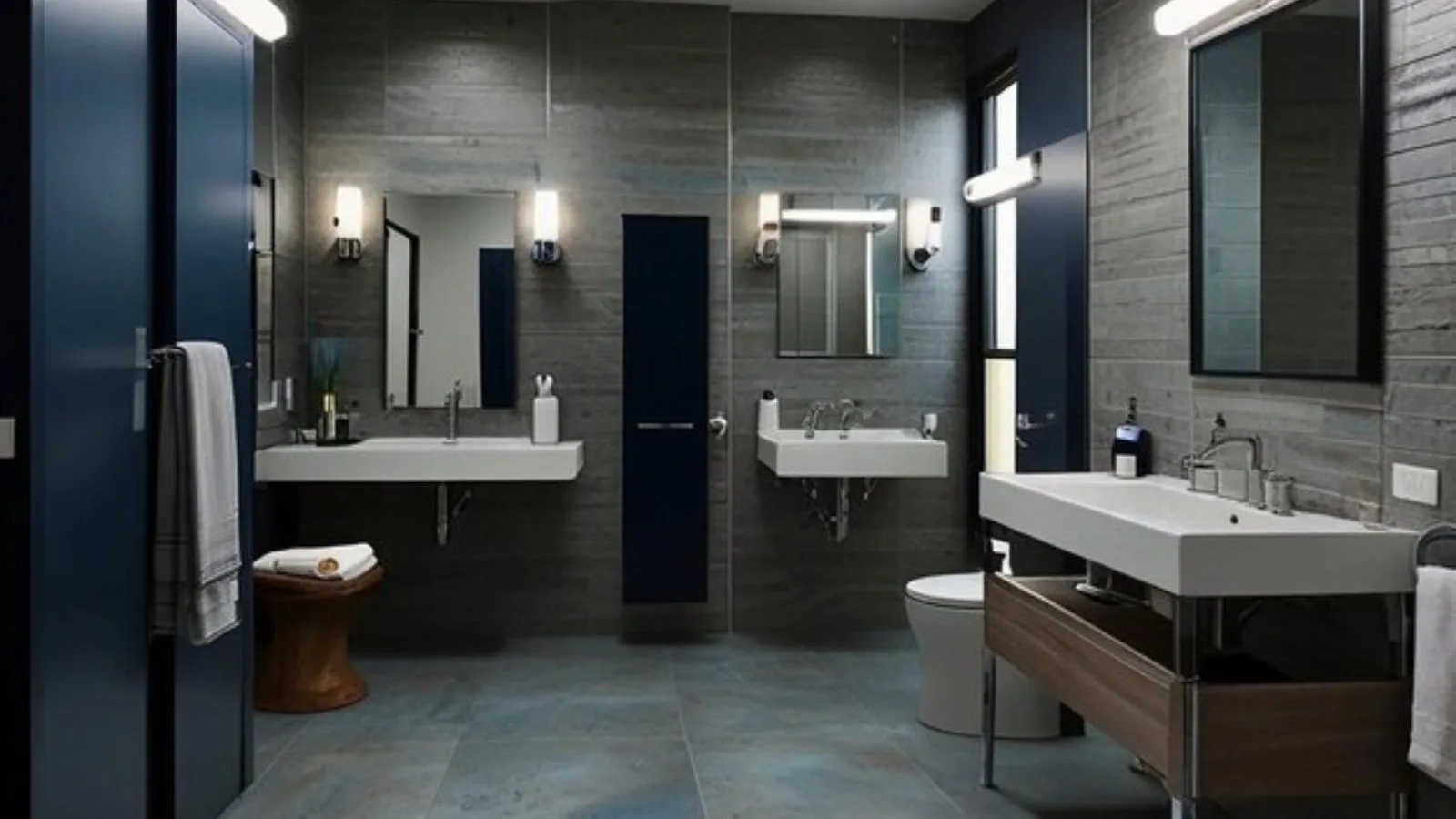
Commercial plumbing work covers a different set of priorities than a residential call: minimizing downtime for the business, meeting code requirements specific to commercial properties, and scheduling around operating hours rather than around a single household's routine.
A property manager or owner calling in usually cares most about how fast the fix happens and whether it can wait until after hours, both of which shape how a visit gets scheduled from the first phone call.
That first call is also when the property type and specific issue get confirmed, so the technician arrives with the right equipment and parts stock for a restaurant, office, or retail visit rather than a generic residential setup, saving a second trip and getting the property back to normal operations faster with less disruption overall.
What Commercial Properties Typically Need
Restaurants need grease trap service and floor drain maintenance to avoid health code violations. Offices and retail spaces need standard fixture repair at a larger scale, often across multiple restrooms. Multi-unit residential and commercial properties both carry annual backflow testing requirements that residential single-family homes don't.
Scheduling Around The Business, Not The Other Way Around
A restaurant can't have its kitchen drain out of service during dinner service, and an office can't have every restroom down during business hours. Commercial work gets scheduled around what actually keeps the business running, including after-hours and early-morning appointments when that's what a property genuinely needs.
Preventive Maintenance Contracts
A property with a maintenance contract gets grease traps, backflow devices, and floor drains checked on a set schedule rather than waiting for something to fail during business hours. For a restaurant or multi-tenant commercial building, that scheduled approach usually costs less over a year than the combined cost of emergency calls it prevents.
Serving Kennesaw's Commercial Corridor
Kennesaw's mix of restaurants, retail centers, and office parks along the main commercial corridors each carry different plumbing priorities: restaurants lean heavily on grease trap and floor drain service, while office and retail properties see more standard fixture-repair-at-scale work across shared restrooms. A technician familiar with both profiles brings the right expectations and parts stock to the visit.
Scheduling starts with a call to discuss the property type and specific issue, and after-hours or early-morning appointments are arranged directly around what keeps a given business operating with minimal disruption.
Commercial Plumbing Pricing In Kennesaw
Real cost depends on property type and size, how many fixtures or devices need service, whether the work happens during or after business hours, and whether it's a one-time call or an ongoing maintenance contract. Larger commercial jobs and ongoing maintenance contracts are quoted based on the specific property. Want your real number? Call (770) 214-4545.
Need scheduling around your business hours?
☎ (770) 214-4545Commercial Compliance Basics
- Grease traps typically need cleaning on a set schedule tied to kitchen volume, not just reactively once they back up.
- Backflow prevention devices require annual testing in most Georgia commercial applications with irrigation or certain plumbing configurations.
- Floor drains in commercial kitchens need periodic maintenance and cleaning to avoid slow-drain violations during a health inspection.
- Multi-tenant properties often need restroom and fixture work coordinated across units to avoid disrupting more than one tenant at a time.
Grease trap service specifically has its own page with more detail: grease trap cleaning. Backflow devices are covered in depth on the backflow testing and prevention page, including required testing frequency for different property types. Smyrna's dense mix of retail and redevelopment generates a similar volume of commercial calls.