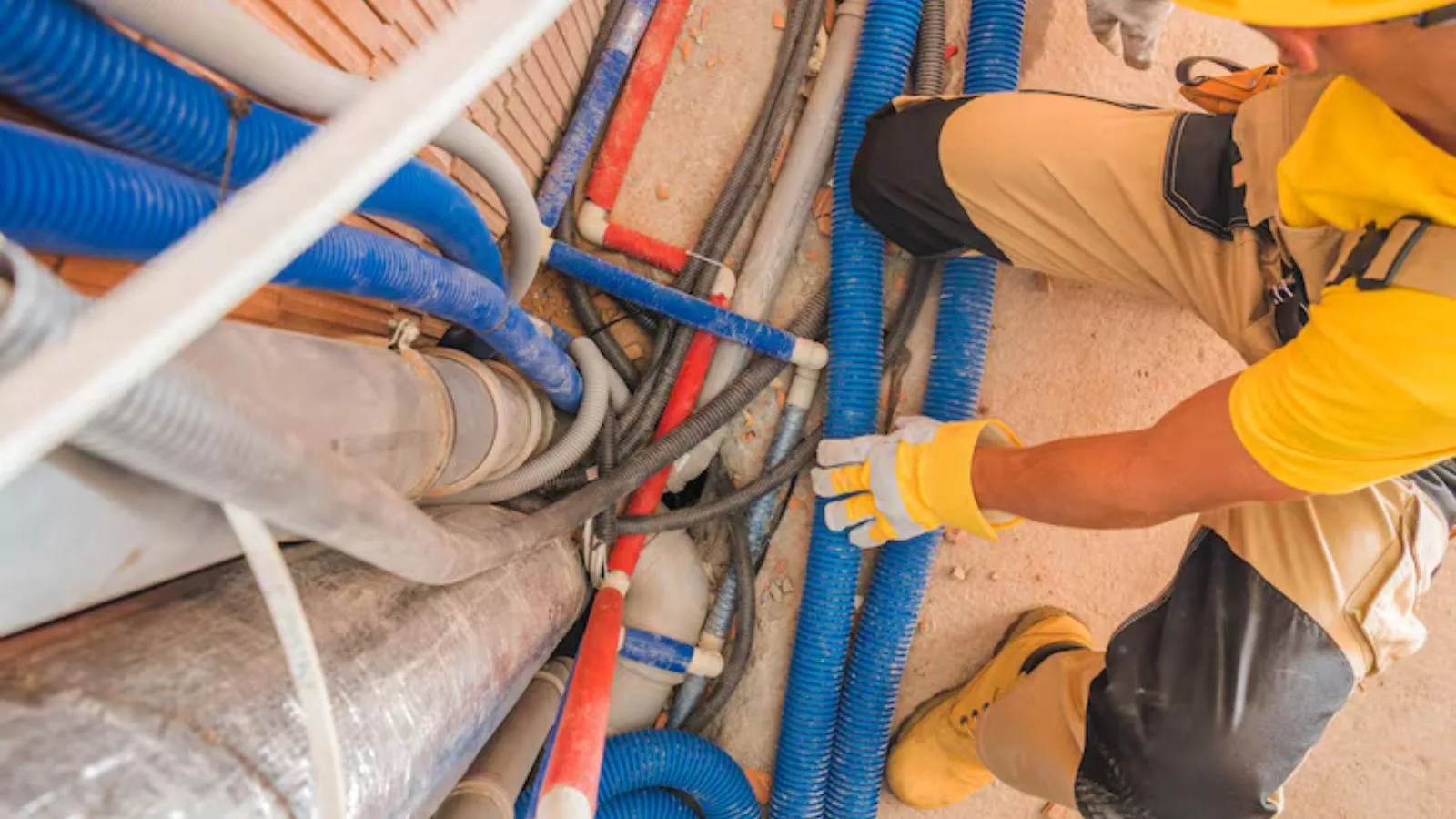
A home with recurring pinhole leaks in multiple locations, persistently low water pressure throughout the house, or discolored water from every fixture usually has a supply line material problem, not a series of unrelated leaks, and repiping is the fix that stops the pattern rather than treating it one leak at a time.
Galvanized and Polybutylene: Why They Fail
Galvanized steel pipe corrodes from the inside over 40 to 50 years, gradually narrowing the interior diameter and restricting flow before it eventually leaks. Polybutylene, used in some Kennesaw-area homes built in the 1980s and early 1990s, degrades from chlorine exposure in municipal water and becomes brittle over time, failing at fittings with little warning.
Either material reaching end of life is a real, documented pattern, not a defect specific to one home, and repiping with copper or PEX resolves the underlying cause rather than patching the latest failure point.
Full Repipe vs. Partial
A full repipe replaces every supply line in the home and is the right call when the original material is failing broadly rather than in one isolated section. A partial repipe targets just the failing section, usually the right choice when a single area, like one bathroom's supply lines, is the source of repeated leaks while the rest of the home's piping tests fine.
What Actually Happens During The Repipe
The first day typically involves running new PEX or copper lines through walls, ceilings, and crawl spaces alongside the old piping, which stays connected and functional until the new lines are ready. Once the new system is pressure-tested, water service switches over to the new lines and the old galvanized or polybutylene pipe is capped and abandoned in place or removed, depending on accessibility.
Drywall patching after wall access typically happens in the final day or two, though the homeowner is usually responsible for repainting the patched sections afterward.
Why Kennesaw Sees This Pattern Specifically
Homes built through the 1980s and into the early 1990s across Kennesaw were commonly plumbed with either galvanized steel or, in the later part of that window, polybutylene, both of which are now reaching or past their realistic service life. A home in this age range that has never been repiped is statistically more likely to develop a leak in the near future than an already-repiped home of the same age.
An in-home estimate confirms the actual scope and access points before any work begins, since wall and ceiling access needs vary enough by home layout that a phone quote alone would not be a reliable number.
What Repiping Costs In Kennesaw
Real cost depends on home size, number of fixtures, whether it's a full or partial repipe, and how much wall or ceiling access is needed. Cost scales accordingly, and an in-home estimate confirms the real number before work begins. Want your real number? Call (770) 214-4545.
Multiple leaks or discolored water sitewide?
☎ (770) 214-4545Signs Your Home May Need Repiping
- More than one pinhole leak in the past year, in different locations.
- Water pressure that has dropped gradually over several years.
- Visible galvanized pipe (dull gray, magnetic) in a crawl space or basement.
- A home built before the mid-1990s that has never been repiped.
A single isolated leak, rather than a sitewide pattern, is more likely covered on the leak detection page or the slab leak detection and repair page. Homes in Powder Springs' historic downtown core see a similar galvanized-pipe pattern given the comparable housing age.